

Throughout History, the marriage of technology and creativity has faced resistance from two fronts: the discomfort of those averse to change and the reluctance of individuals to openly acknowledge their use of new techniques.
Also interesting: 7 useful ChatGPT prompts for musicians and music producers
The Hockney-Falco Thesis
A fascinating recent example illuminates the reaction to the Hockney-Falco thesis, championed in 2001 by a duo comprising an artist and a physicist. According to their proposition, the Renaissance masters' strides in realism were propelled by the clandestine use of optical devices, such as the camera obscura or curved mirrors. Delving into the works of veritable paragons of realism and perspective, including van Eyck, Dürer, and da Vinci, these audacious researchers contended that advancements in lens production played a crucial role during that era.
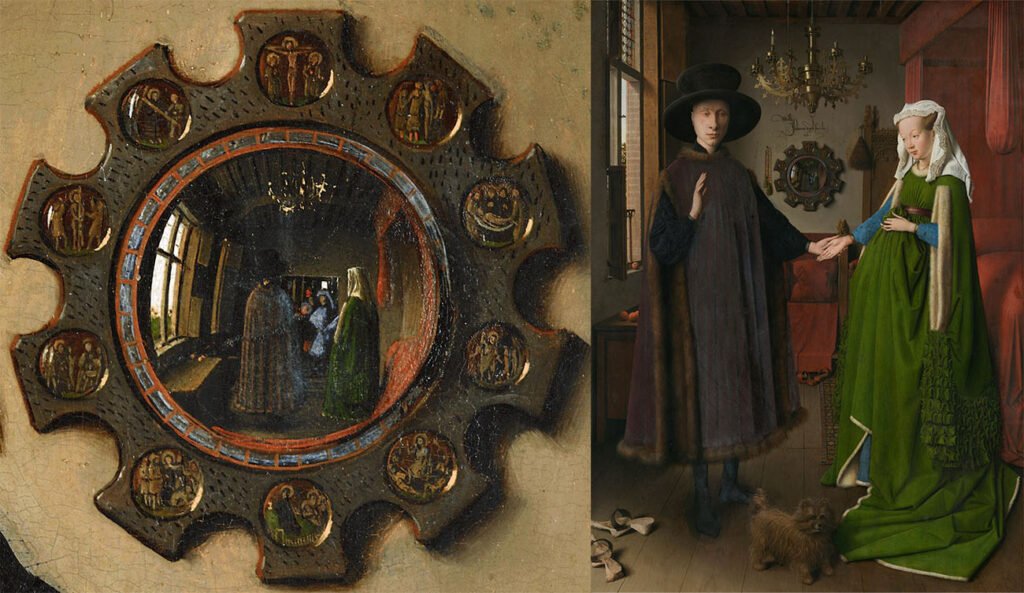
Intriguingly, these master artists themselves likely concealed their employment of such devices, either to shield themselves from potential criticism or to enhance the value of their opus. Van Eyck, for instance, surreptitiously incorporated subtle hints at the use of lenses and mirrors in his works but never openly admitted to doing so. Nevertheless, this theory has ignited passionate rejection from numerous art historians, staunchly defending the honorability of these iconic artists, as if the utilization of lenses or mirrors to more faithfully represent the world were inherently dishonest.
The Stradivarius violins
Turning to the realm of musical artistry, the mystery enveloping the Stradivarius violins presents an equally captivating tale of secret technological advancements. The renowned Italian luthier Antonio Stradivari (1644-1737) has bestowed upon the world a collection of extraordinary instruments that continue to bewitch musicians, collectors, and scientists alike. The precise techniques employed by Stradivari in crafting these masterpieces have defied definitive unraveling, perpetuating an enduring enigma.
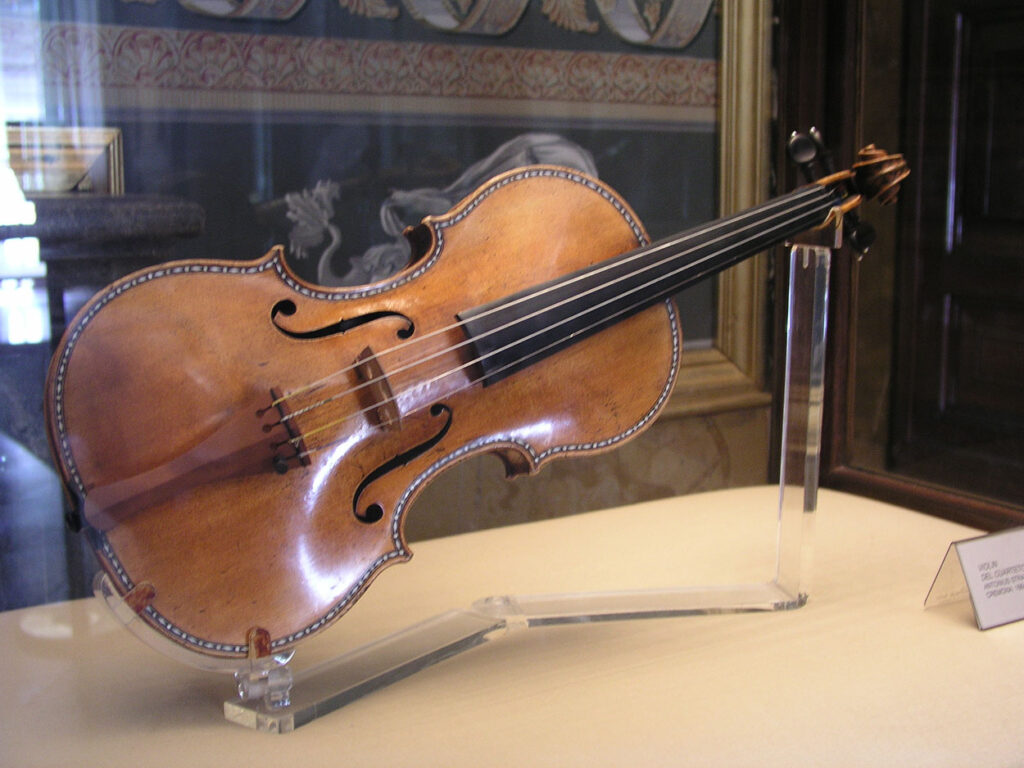
While theories abound, recent research hints at a serendipitous discovery—a wood treatment method aimed at warding off worm infestations, which inadvertently led to the creation of violins possessing an unparalleled fusion of tonal brilliance, projection, and richness. Stradivari, crafting around 1,200 violins during his lifetime, exclusively reserved these sonic treasures for the elite, including royalty. Today, approximately 600 Stradivarius violins endure, their market value soaring to astronomical heights of up to 10 million euros. Does this signify Stradivari's mastery or a mere stroke of luck? Adherents of the musical arts shun the notion that chance can play such a pivotal role in achieving greatness.
Conclusion
Yet, it is essential to recognize that technology, when excessively wielded, carries inherent perils. Fears of losing originality or the cherished "human touch" find validation as digital prowess burgeons exponentially, teetering precariously on the precipice of uncontrolled growth. However, artists capable of deftly harnessing emerging technologies to augment their craft, thereby enhancing the value of their work, are poised for greater success than those who resist. Inevitably, it is not ChatGPT that will render the mediocre artist obsolete, but rather the ascendancy of another individual who has mastered its utilization to a superior degree.
In a spirit of transparency, dear reader, I must confess: I stand neither as a deceitful impostor nor as a prodigious genius and am happy to reveal my own secret to you. I myself have used an auto-correct tool when writing the draft of this article and have run it through ChatGPT to improve on the style by using the prompt “rewrite this article in the style of the New Yorker magazine”.
Keep reading:











 English
  German
  French
  Dutch
Dutch  Spanish
  Portuguese